Introduction
Web development is one of the most in-demand skills in 2026. If you want to build websites, web applications, or start a tech career but do not know where to begin, understanding the difference between frontend and backend development is the first step.
In this guide, we will explain frontend and backend in simple English, show the technologies used in each, and help you plan your learning roadmap as a beginner.
What is Frontend?
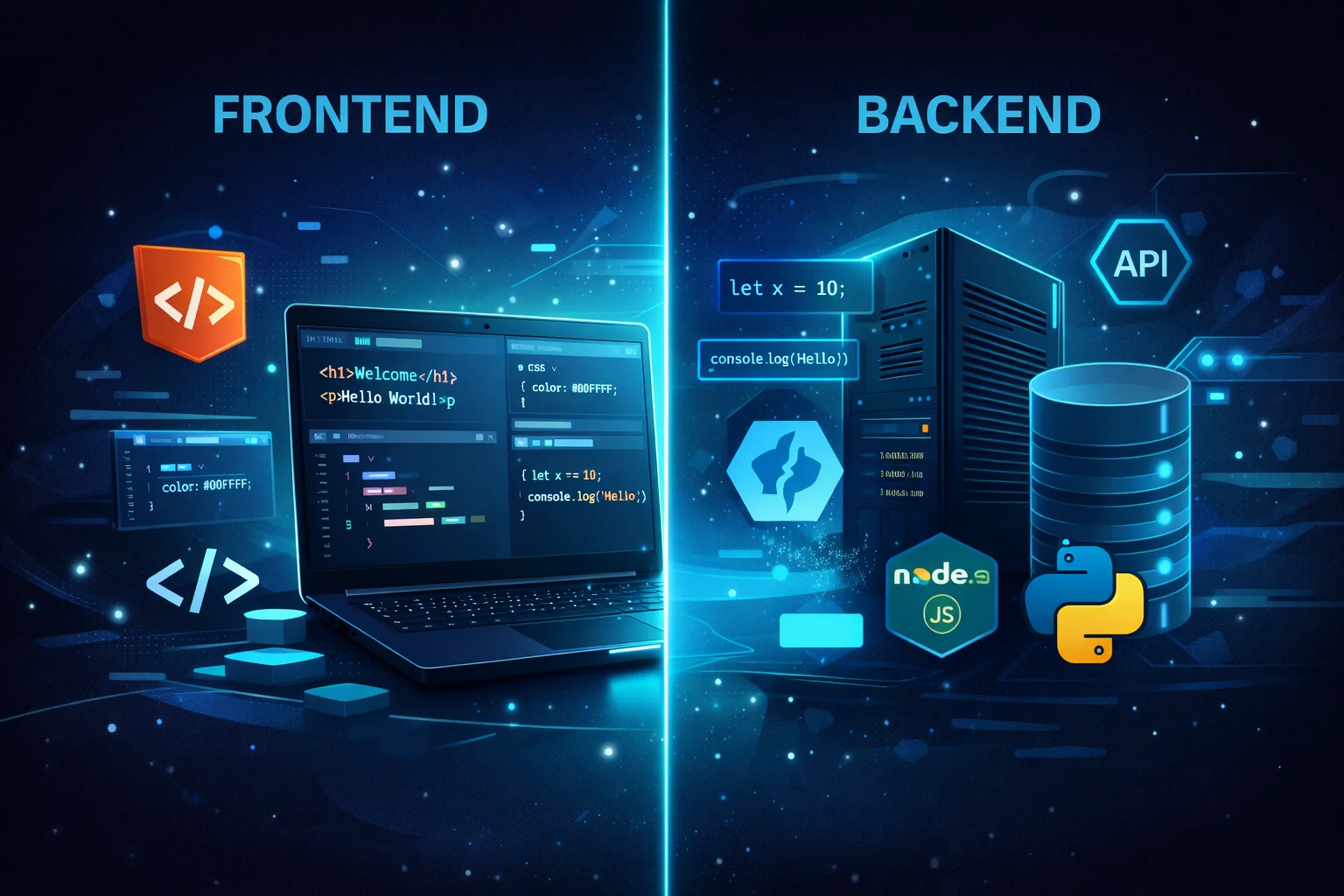
Frontend development, also called client-side development, is everything that users see and interact with on a website. This includes layouts, buttons, forms, images, animations, menus, and interactive elements.
The goal of frontend development is to make a website visually appealing, interactive, and user-friendly.
Common Frontend Technologies
- HTML: The structure of web pages
- CSS: Styles, colors, layouts, and design
- JavaScript: Interactivity and dynamic content
- React, Vue.js, Angular: Modern frontend frameworks to build faster and scalable applications
Frontend Career Opportunities
Frontend developers can work in web agencies, startups, or as freelancers. Typical roles include building user interfaces, landing pages, dashboards, and interactive apps. Strong design sense and coding skills are important.
What is Backend?
Backend development, also called server-side development, works behind the scenes. Backend makes websites functional by handling databases, server logic, authentication, and sending the right data to the frontend.
Backend ensures that your website works correctly and securely. It also connects to APIs, handles user data, and processes requests from the frontend.
Common Backend Technologies
- Node.js: JavaScript runtime for backend
- Python: Popular backend language
- PHP: Used for WordPress and server-side logic
- Java: Enterprise-level backend applications
- Databases: MySQL, PostgreSQL, MongoDB for storing data
Backend Career Opportunities
Backend developers focus on servers, databases, APIs, and performance. Roles include building REST APIs, e-commerce backends, cloud services, and managing secure data. Logical thinking and problem-solving are essential.
Frontend vs Backend: Key Differences
| Aspect | Frontend | Backend |
|---|---|---|
| Definition | What users see and interact with | Works behind the scenes, handles logic and data |
| Main Goal | User experience and design | Functionality and performance |
| Languages & Tools | HTML, CSS, JavaScript, React, Vue.js, Angular | Node.js, Python, PHP, Java, Databases |
| Role Examples | UI Developer, Frontend Engineer, Web Designer | Backend Engineer, API Developer, Database Manager |
How to Learn Frontend and Backend as a Beginner
- Start with HTML & CSS for structure and styling.
- Learn basic JavaScript for interactivity.
- Build small frontend projects: To-Do List, Portfolio, Calculator.
- Learn a frontend framework like React to make larger apps.
- Once comfortable, start backend basics: Node.js, Python, PHP.
- Learn databases: MongoDB, MySQL.
- Connect frontend with backend using APIs.
- Build full stack projects: Blog App, E-commerce site, Task Manager.
- Keep practicing and expand your skills: authentication, cloud deployment, optimization.
Conclusion
Frontend and backend are both essential in web development. Frontend makes websites beautiful and interactive, while backend ensures everything works behind the scenes. By learning both, you can become a full stack developer and build complete web applications from scratch.